

Scrutinising the Coffee Industry's Sustainability Progress
It's the Coffee News Roundup: Week Ending June 12th
It's the Coffee News Roundup: Week Ending June 12th

For paid subscribers: retail coffee prices have soared in recent years, driven by climbing commodity costs and tariff stupidity. Some of those pressures have now started to ease, and yet retail prices continue to rise. Will they ever come down?
Tarantino has mentioned his affinity for coffee shops in the past as a place to meet and talk with friends. Similarly, coffee anchors the characters in Tarantino movies, grounding them in their environment, making them more real.

This post contains strong language as well as spoilers.
(Can you have spoilers for a film from 1994?)
Pulp Fiction is an undisputed masterpiece, a film so enshrined in popular culture that you can actually buy a replica version of Jules’ Bad Motherfucker wallet. It’s probably one of the most quoted and quotable films of all time, and has been parodied an uncountable number of times. It’s a wonderfully twisted, maverick movie full of paradoxes, coincidences and ultra violence. And coffee.
Coffee and diners play an important part in many Quentin Tarantino movies, but Pulp Fiction probably has the most instances of people drinking, dropping, or talking about coffee.
With what essentially amounts to a featured supporting role, coffee shows up constantly throughout the various story strands:
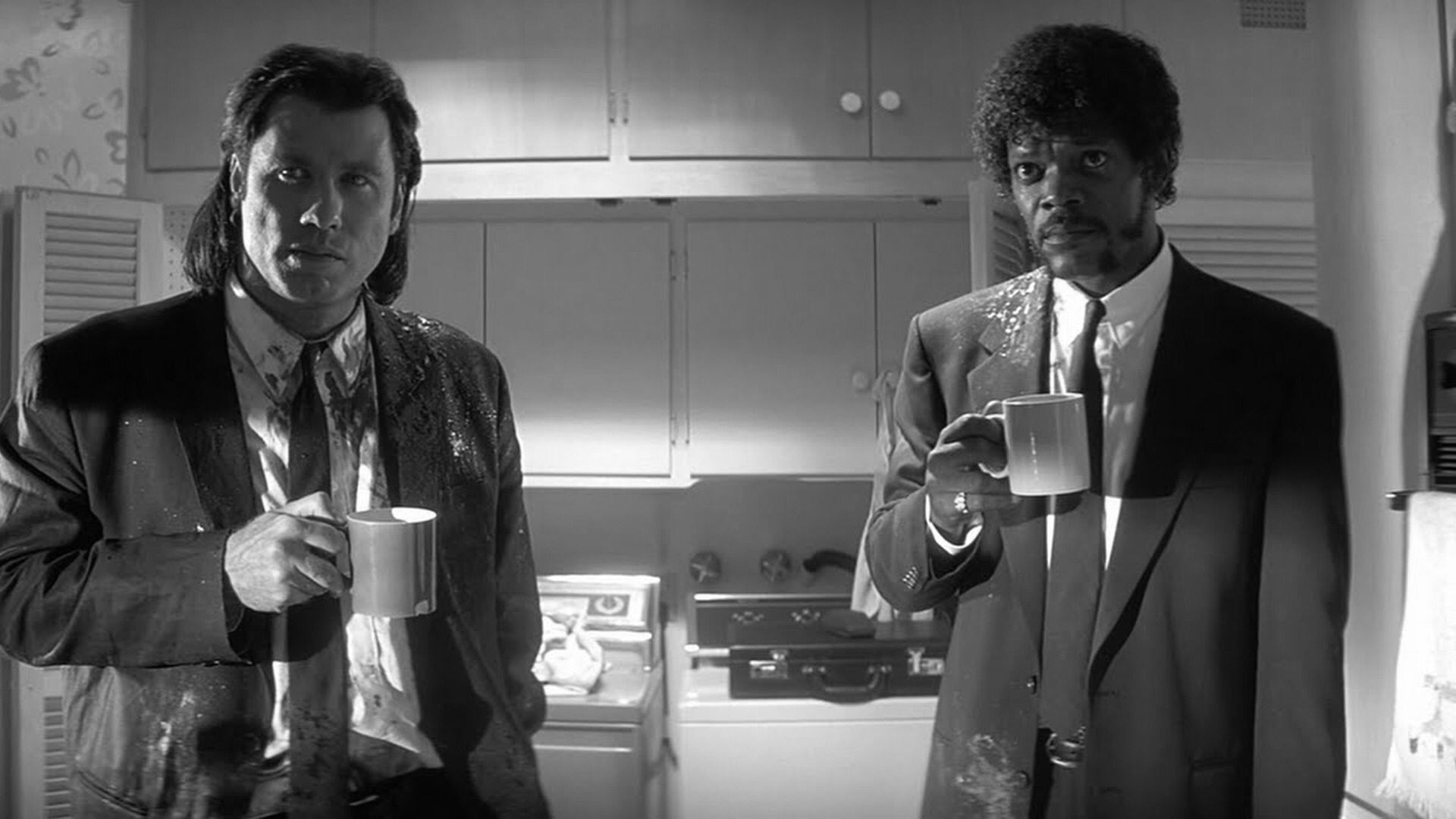
The scene which features coffee most prominently is when Jules and Vincent take a dead body to Jimmie’s house to dispose of it. Jimmie (Tarantino, hamming it up good) makes them coffee and Jules utters the immortal words:
“Goddamn Jimmie, this is some serious gourmet shit.”
The conversation devolves from there - Tarantino is not a good actor - but that line remains a dependable compliment for any impressive cup of coffee.
As does The Wolf's (Harvey Keitel) response when Jimmie asks him how he takes his coffee: "Lotta cream, lotta sugar."
This is the sort of scenario Tarantino relishes and always handles expertly. The straightforward nonchalance of the conversation is juxtaposed with the brutality of the situation: Jules and Vincent sip coffee while drenched in blood and with a dead body in the car.
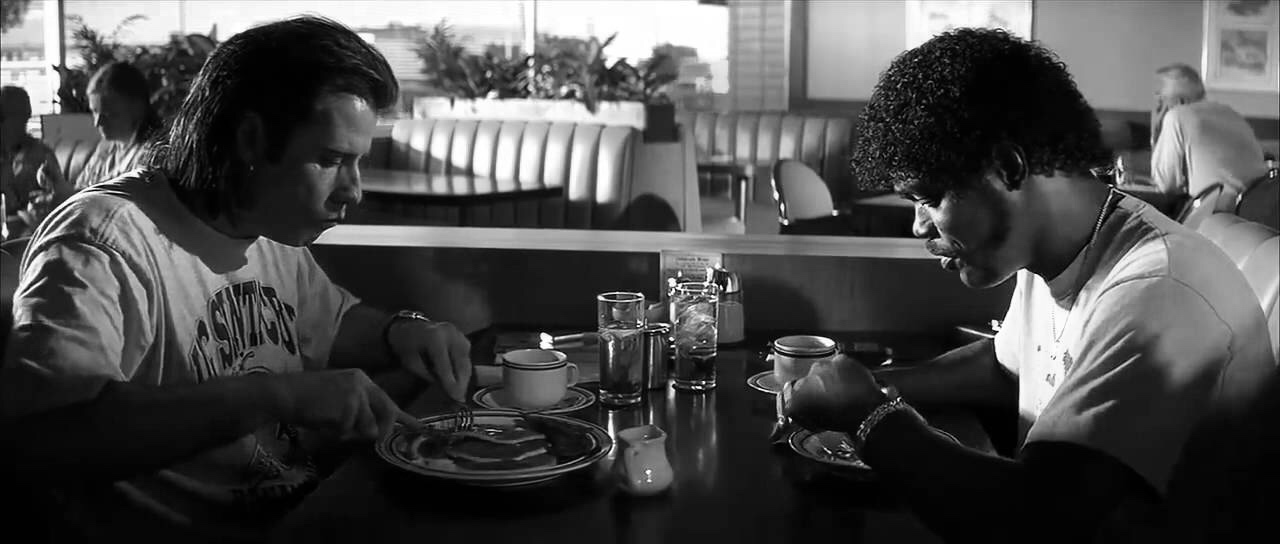
In the final scene, when Jules has his revelation after witnessing a miracle he does so while drinking a cup of coffee:
“Yeah, I was sitting here, eating my muffin and drinking my coffee and replaying the incident in my head, when I had what alcoholics refer to as a moment of clarity.”
The miracle - being shot at from point blank range and emerging unscathed - affects him to the point of deciding to give up his life of crime and walk the earth, “You know, like Caine in Kung Fu”.
“So you decided to be a bum?” retorts Vincent.
Tarantino has mentioned his affinity for coffee shops in the past as a place to meet and talk with friends. Similarly, coffee anchors the characters in Tarantino movies, grounding them in their environment, making them more real.

Meteorologists are predicting that an exceptionally strong El Niño will likely form in 2026. If past events are any indication, the impacts on coffee could be profound.

Tech CEOs and other prognosticators have described drones as the future of coffee delivery for more than a decade. Why haven’t they materialised yet?

As the Hormuz Strait blockade and its cascading consequences lay bare, coffee is still profoundly reliant on petroleum and its byproducts.

The internet is full of warnings about the dangers lurking within coffee, whether it’s mould, mycotoxins, or other contaminants. The truth, however, is far more prosaic.
Deeply researched articles exploring all the ways coffee connects to politics, history, and culture—delivered direct to your inbox