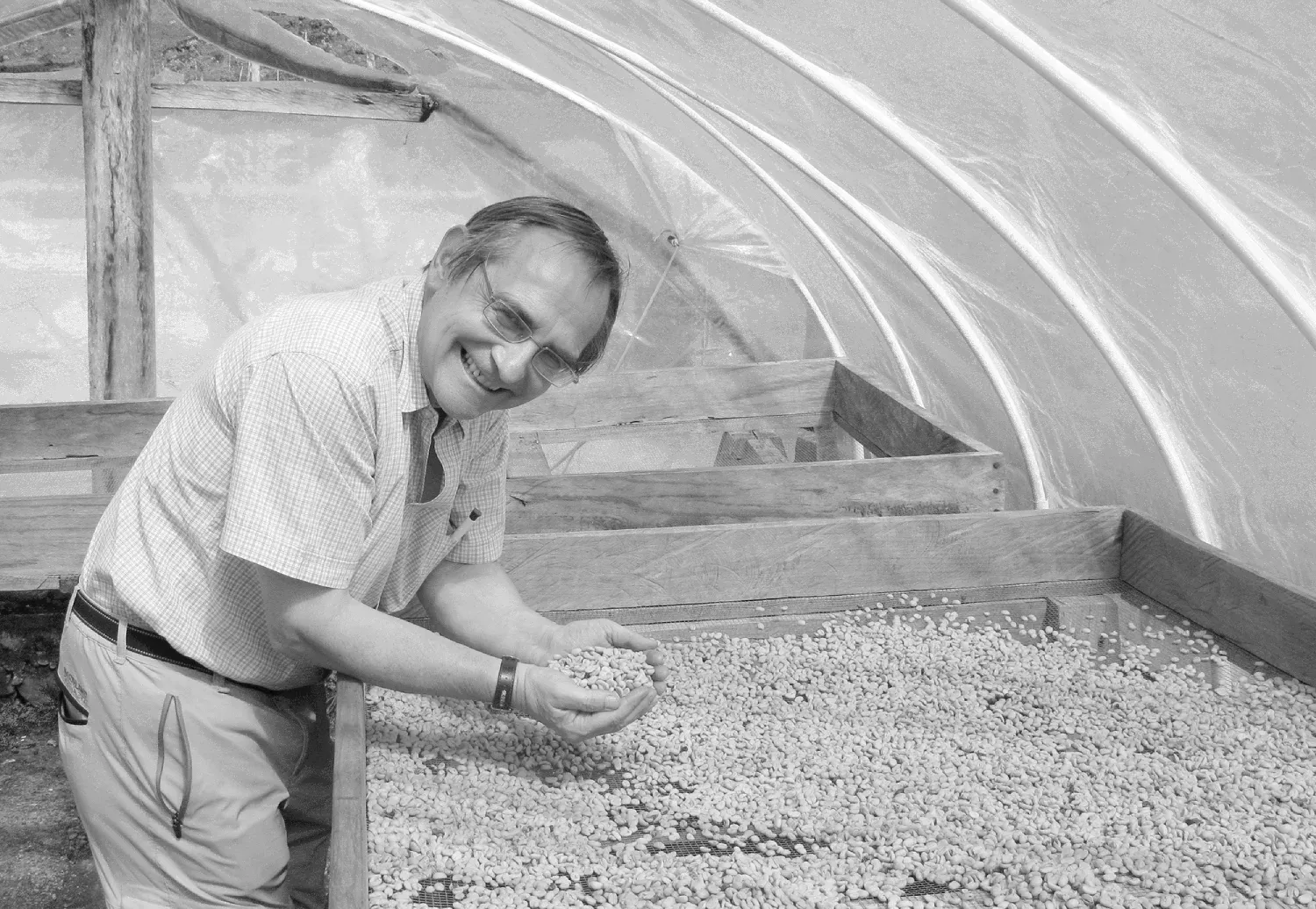
Coffee industry veteran Walter Zwald has resigned from his honorary role at the Swiss Coffee Trade Association, alleging ethical failures among some of the world’s largest coffee companies and calling for mandatory sustainability standards.
For paid subscribers: From Howard Schultz’ hostility to the relatively more amenable Laxman Narasimhan and through to Brian Niccol’s current intransigence, Starbucks' response to its union over the years has mirrored the CEO’s position.
Honorary President of Swiss Coffee Trade Association Resigns, Calls for Widespread Change
Coffee industry veteran Walter Zwald has resigned from his honorary role at the Swiss Coffee Trade Association, alleging ethical failures among some of the world’s largest coffee companies and calling for mandatory sustainability standards.
Walter Zwald, honorary president of the Swiss Coffee Trade Association (SCTA) and a respected figure within the coffee industry, has resigned from his position after writing an open letter to the SCTA.
In the letter, posted to LinkedIn on June 3, Zwald criticised the association—which counts many of the coffee industry’s largest corporations as members—for what he described as a lack of even the most basic sustainability standards. “The time has come for us to adopt mandatory sustainability criteria for all member companies”, he wrote. He gave the association one month to address his concerns. After receiving no response, he tells me that he has now officially resigned.
Zwald has worked in the coffee industry for more than 50 years, and served as SCTA president from 1989 to 2002. In his letter, Zwald described what he views as the SCTA’s “refusal to meet the ethical standards the world now expects—and that coffee-growing communities desperately need”. Without concrete change in the form of enforceable sustainability criteria for the association’s 40-plus members, Zwald wrote that he could not continue in his role.
While such public resignations are not common within the coffee industry, there have been numerous instances of senior executives at tech companies resigning in protest of their employers’ ethical stances in recent years. In a 2025 article in the Washington and Lee Law Review, Asaf Eckstein and Ziv Granov described “outspoken resignations” by corporate directors as “an integral aspect of effective corporate governance”.
The letter outlined four criteria that Zwald called “the minimum ethical baseline for doing business in 2026”. They are: No deforestation in supply chains; full traceability to the farm level; zero tolerance for child labour, forced labour, or sexual violence; and a commitment to a living income for farmers and a living wage for farmworkers.
He gave the SCTA one month to address his concerns, which he says it failed to do. Krisztina Szalai, secretary general of the SCTA, told me in an email that, while the association “will respond in due course” to Zwald’s letter, it does not have any further comment. Zwald says that the association has not been in touch with him, and that his deadline has passed. He also says he didn’t expect to receive a response. “I was not surprised that they did not reply, because what could they tell me? They didn’t do anything”, he says.
If you value independent coverage of the coffee industry, please consider becoming a paid subscriber to The Pourover. Paid subscribers receive biweekly bonus articles, commenting privileges, and, most importantly, help me continue to bring you in-depth coverage and critique of the global coffee industry.
Switzerland: The World’s Third-Largest Coffee Exporter
Switzerland plays an outsized role in the global coffee industry. According to the SCTA, its members are responsible for more than 50% of the world’s green coffee trade. The most recent available data shows that, in 2024, Switzerland exported $3.84 billion worth of coffee—technically making it the world’s third-largest coffee exporter.
SCTA members include the sourcing arms of major roaster-retailers like Nestlé, Keurig Dr Pepper, Starbucks, and Strauss Coffee, as well as green trading giants such as Olam, Volcafe, Sucafina, and Neumann Kaffee Gruppe (NKG). According to reporting by Reuters and others, many of these companies base their operations in Switzerland largely due to friendly tax arrangements. Starbucks, for example, has repeatedly come under fire for the use of legal tax avoidance practices that funnel profits through its Swiss business. (Starbucks has previously said that it “pays appropriate and correct levels of tax in all jurisdictions in which it operates”.)
During much of his time leading the SCTA, Zwald pushed for change within the industry. He presented a proposal to the International Coffee Organization (ICO) in 2001 that would have levied $1 from every 60kg bag of green coffee sold to go towards helping farmers as well as growing demand. “We’re talking about cents [per cup], it’s nothing”, Zwald says.
However, there was a lack of support from the industry. “Nobody wanted to pay at that time”, he says. Zwald resigned as SCTA president in 2002 to focus on his consulting business, and took on the role of honorary president. He continued to lobby for his coffee levy, creating the Worldwide Sustainable Coffee Fund and unsuccessfully pitching the concept to the ICO in 2005. This was despite the fact that, as the latest Coffee Barometer report documents, the industry was beginning to look towards economic sustainability solutions in the face of the early 2000s price crisis.
In the years since, the coffee industry’s major players have embraced private, market-driven measures to address economic imbalances. These include certifications like Fairtrade, as well as in-house sustainability programmes such as Starbucks’ C.A.F.E. Practices sourcing system. There are also multi-stakeholder initiatives (MSIs), or pre-competitive partnerships that aim to coordinate large-scale change that would be hard for companies to achieve individually. Switzerland even has its own MSI, the Swiss Sustainable Coffee Platform.
However, the 2026 Coffee Barometer notes that, while these voluntary measures have made some progress over the past two decades, they are mostly designed to avoid external scrutiny and allow the biggest companies to control their outcomes. The gains made have been “genuine yet insufficient”, the report’s authors write, and “have consistently avoided changes that would challenge the commercial terms of trade” such as price transparency and tax reform.
Sign up for The Pourover
A newsletter about coffee—its culture, politics, and how it connects to the wider world.
No spam. Unsubscribe anytime.
The Kaweri Case
While Zwald’s letter voiced broad criticism of the SCTA and the Swiss coffee industry as a whole, he tells me that he had one main reason for resigning now. In April, Zwald says he met with Yann Wyss, Nestlé’s global head of public affairs, and requested that the coffee giant stop doing business with NKG. Specifically, Zwald is critical of NKG’s handling of an ongoing legal battle in Uganda over allegations of land theft.
The case dates back to 2001, when an NKG subsidiary leased more than 6,000 acres of land from the Ugandan government to create a coffee farm. That land had recently been sold to the government, but more than 2,000 people lived and worked on it. To create the Kaweri Coffee Plantation, those smallholder families were evicted—and in some cases forced off the land by the Ugandan military.
The ensuing legal battle over compensation is complex and still ongoing. NKG argues that it leased the land legally, and any evicted tenants’ issues are with the Ugandan government and the previous owner. It also disputes the number of smallholders involved.
The company declined to comment for this article, and instead pointed me to its previous public statements. NKG has a section on its press and media webpage dedicated to the dispute, including a chronology of events from its perspective. One statement reads in part: “Kaweri supports a settlement in this case to the extent possible, but neither Kaweri nor NKG are responsible for the outcome of the case”.
The Kaweri case has been a focus for Zwald for more than a decade. In 2015, he was interviewed for a German documentary on the subject, calling the situation “shameful”. He has also consulted with the German human rights organisation FIAN, which has advocated on behalf of the displaced Ugandan farmers since 2001.
NKG is a multi-billion-dollar green coffee company and supplies many major roasters, including Nestlé. According to Zwald, brands that work with NKG, including Nestlé, have a responsibility to act. In their meeting, Zwald says Wyss told him that he couldn’t do anything.
A Nestlé spokesperson told me that, “As we have explained to Mr. Walter Zwald on multiple occasions, both in writing and in person, we do not source coffee from coffee farms that don’t meet our due diligence standards. This applies to coffee sourced through Neumann Kaffee Gruppe. We confirm that coffee from the Kaweri farm is not part of our supply chain”.
However, Zwald remains unmoved. “If Nestlé buys coffee from Neumann, its supply chain is not at all ethical”, he tells me. He says he left the meeting with the feeling that he had to do something more. On the way home, he decided to resign.
Walter Zwald. Photo courtesy of Walter Zwald Coffee Buying & Consulting
‘Hugely Significant’
When it was published on LinkedIn in June, Zwald’s letter received considerable attention from coffee industry members, including dozens of comments and shares. Many responses noted how unusual it is for an industry veteran to speak out in this manner.
Etelle Higonnet, founder of the industry watchdog Coffee Watch, published Zwald’s letter on her LinkedIn page and has been supporting him in a personal capacity. “I think this letter is hugely significant”, she tells me. “Walter is a titan in the world of coffee and was recognised as such by the industry for decades, and the fact that he is now demanding that the industry clean up its act when it comes to human rights and environmental performance across the board is incredibly important”.
Other industry figures had similar responses. “Walter has put his status and reputation on the line”, says Bob Fish, co-founder of the U.S. chain Biggby Coffee and himself an outspoken critic of the coffee status quo. (He is also a paid supporter of The Pourover.) “He has become somebody who knows the truth, acknowledged it, and decided that he can no longer wilfully look the other way”.
Others saw similarities between Zwald’s demands and ongoing work by campaigners to push the industry towards more transparent and sustainable practices. “Walter’s sentiments were an echo of the recently published Coffee Barometer, which showcased the outsized role that Switzerland, and by extension the SCTA, can play to mainstream sustainability investment—and outcomes—into the coffee trade”, says Ashlee Tuttleman, coffee lead at the VOCAL Coffee Alliance, a coalition of civil society organisations.
The letter also highlighted Zwald’s long-term push for change from within the industry. “Over decades, Walter has consistently voiced the inconvenient truths of growing coffee, both environmental and social”, says climate scientist Peter Baker. “I saw it first hand at ICO sessions over 20 years ago where his reasonable and affordable proposal was met mostly with polite indifference. Things have only gotten worse since then but there is still not enough industry support for the comprehensive actions now needed”.
Ultimately, it’s too early to say whether Zwald’s public letter and resignation will serve as a wake-up call for the SCTA and the wider coffee industry. It also remains to be seen whether other industry figures will feel prompted to take a similar public stance, but Zwald hopes that his actions can inspire some change. In the end, “I can lose nothing”, he says. “I don’t need anymore my reputation, I’m already [nearly] 78 years old”.
Thanks for reading! If you'd like to get even more articles like these, and support my work, please consider becoming a paid subscriber to The Pourover:
I'm a coffee writer and creator of The Pourover. Based in Scotland, I have over a decade of experience in the specialty coffee industry. Ask me about coffeewashing. It's pronounced Fin (he/him)
Nearly five years since the first Starbucks location unionised, contract negotiations are still dragging on. Can external pressure from shareholders and human-rights campaigners make a difference?
Meteorologists are predicting that an exceptionally strong El Niño will likely form in 2026. If past events are any indication, the impacts on coffee could be profound.